What Netflix Series Jeffrey Epstein: Filthy Rich Reveals About Power, Parenting, and the Psychology of Silence
Watching Jeffrey Epstein: Filthy Rich is disturbing not only because of the crimes it documents, but because of what it reveals about adults and the systems that protect them. As the survivor testimonies unfold, what lingers is not only the horror of exploitation, but the repeated failure of institutions, families, and authority figures to truly see and believe young girls. The documentary becomes less about one man and more about power - how it operates, how it seduces, and how it silences. For those of us who are parents and educators, it forces an uncomfortable but necessary reflection - What is the emotional climate we create around children, and how do we use the power we hold over them?
Psychodynamic and psychological thinking broadly says that authority is not merely a social role. It is an emotional position that adults unconsciously invest in. A compliant child stabilizes the adult ego. A questioning child can feel destabilizing. When a teenager says, that feels unfair or I’m uncomfortable…. the statement may be heard not as communication, but as defiance. This especially rings true for many parents raising teenagers today, many of whom grew up with similar values and restrictions during their own childhoods. What gets activated in adults in those moments is often not reason but vulnerability - fear of losing control, fear of chaos, fear of inadequacy. In many homes and classrooms particularly within hierarchical cultural structures …questioning authority is still conflated with disrespect. Adolescence, however, is developmentally wired for differentiation. To disagree, to test, to push against boundaries is not pathology… it is growth. When adults shut this down reflexively, children internalize a dangerous lesson which amounts to connection is conditional upon compliance.
Many of the survivors in the documentary came from complex or unstable relational backgrounds. Psychology highlights how early attachment experiences form an internal working model…. a relational blueprint that shapes how safety, affection, and power are interpreted. When attunement has been inconsistent, it is natural for a youngster to experience attention as care, or even love. When emotional validation has been scarce, flattery cannot be placed in context…it feels like nourishment. When love has been conditional, secrecy can feel intimate rather than alarming. Children do not assess danger purely cognitively. They assess it through relational familiarity. If discomfort has historically been dismissed or overridden, they may override it themselves in order to preserve attachment. This is not weakness. It is adaptation.
Public conversations sometimes emphasize personal responsibility and self-defence, as seen when Rani Mukerji suggested that women must learn to fight back during Rajeev Masand’s 2018 roundtable discussion. The controversy that followed highlighted an important tension… encouraging agency is psychologically valid, but framing safety purely as an individual responsibility risks overlooking developmental context. There is truth in encouraging assertiveness. However, as a counsellor who listens to adolescents through the day, I can attest experientially that agency does not develop in isolation. A child who has never successfully negotiated with a parent cannot suddenly negotiate with coercive power elsewhere. A child who is shut down continuously will not suddenly enforce boundaries where they’re being crossed instinctually. A student punished for respectfully questioning a teacher may freeze when confronted by authority outside school. Assertiveness is built through repeated micro-experiences of being taken seriously. If we want children to speak up in unsafe spaces, we must first tolerate (and even welcome) their voices in safe ones.
That requires something that many adults struggle with. Adult ego strength - the capacity to remain steady while being challenged. The documentary also underscores the role of financial dependency in exploitation. Money functioned not just as currency but as psychological leverage. Dependency when I locate it through the lens of human psychology is both economic and emotional. When survival feels precarious financial offers can masquerade as containment and care. Platforms such as LXME promote financial literacy for women, which represents a meaningful cultural shift. Many Instagram accounts such as ‘Finance with Sharan’ is followed by many people looking to expand their wealth. Yet financial autonomy must be cultivated earlier. Teaching children developmentally appropriate concepts of money, value exchange, and economic boundaries is a way of strengthening them much beyond the scope of formal curriculum. Financial independence supports psychological independence.
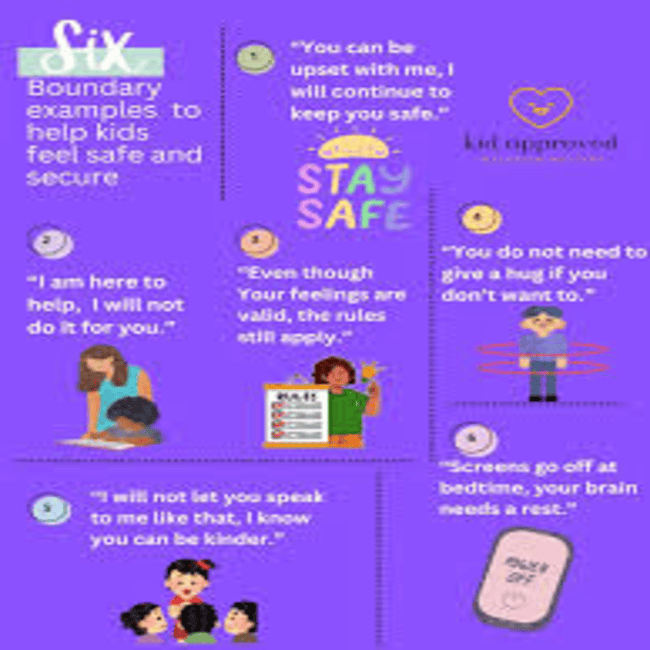
Boundaries, too, cannot be (purely) reduced to curriculum. Workshops on ‘good touch, bad touch’ are necessary but insufficient if every day relational boundaries are routinely crossed. When a child says ‘stop’ during play and the adult continues laughing, the body learns that ‘no’ does not matter. When a teenager expresses discomfort and is mocked for being dramatic, the psyche learns to mistrust its own signals. Repeated minor boundary violations can create a split between bodily instinct and relational loyalty …the body registers danger while the mind prioritizes attachment. A culture of boundaries is lived through small acts - knocking before entering a room, asking before hugging, apologizing when wrong, explaining rules rather than enforcing them through fear. Children internalize what is consistently practiced, not what is theoretically preached. Therefore, to the parent reading this, please know that education isn’t formal curriculum only in the school. It’s also the culture within the home.
At this point, it is important to clarify something. Advocating for children’s voices is not the same as advocating for boundarylessness. Recent incidents including the tragedy in Gujarat involving a student physically assaulting a teacher remind us that the pendulum can swing in the opposite direction. Children require structure. They require containment. They require adults who can hold firm limits in the face of genuinely harmful behaviour. This reflection is not asking parents or educators to shrink, tolerate aggression, or abdicate responsibility. It is asking something far more demanding. That we uphold necessary boundaries while simultaneously modeling relational health. Containment and empathy are not opposites…they are complementary. A mature authority can say no without humiliation, enforce consequence without retaliation, and remain connected without surrendering structure.
An equally critical piece especially in the context of protecting girls (as well as boys, children broadly) is the cultivation of healthy, realistic self-esteem. Not inflated praise. Not performative empowerment. But a grounded sense of worth that is not contingent on pleasing others. Many girls are still subtly conditioned to prioritize being ‘good’ over being confident. To be agreeable over being assertive. To preserve harmony over expressing discomfort. Despite waves of feminism, progress, and legal equality, relationally a bold girl is often labelled troublesome long before she is recognized as self-assured. When confidence is misread as defiance, girls internalize the message that belonging requires shrinking.
Healthy self-esteem develops when children experience three things consistently - A) Their feelings are taken seriously, B) Their competence is acknowledged without exaggeration C) Their ‘no’ does not jeopardize connection.Self-esteem is not built through slogans but through relational evidence. When a girl sees that she can disagree and still be loved, fail and still be respected, assert and still be safe - confidence becomes embodied rather than rehearsed. Perhaps the most difficult truth that Jeffrey Epstein: Filthy Rich confronts us with is that large-scale abuse thrives in ecosystems where adult comfort is prioritized over children’s credibility. Communities often collude sometimes …. unconsciously to preserve stability and avoid the anxiety of confronting powerful figures. It is easier to doubt a young person than to dismantle a hierarchy. For parents and educators, the real work is internal. We must ask ourselves what our children’s independence stirs in us. Do we equate obedience with love? Do we feel diminished when questioned? Can we remain grounded when authority is negotiated?
Protection is not only surveillance, restriction, or teaching children to fight. It is building relationships in which they trust that their voice will not rupture connection. It is modeling how power can be exercised without exploitation. It is cultivating self-esteem sturdy enough to withstand flattery, pressure, and coercion. If we want safer futures, we must raise children especially girls who expect to be heard, who experience authority as accountable, and who know that saying no will not cost them belonging. That begins long before danger appears. It begins in how we respond the next time a child disagrees with us not as a threat to our authority, but as evidence that they are becoming psychologically whole.
 In the Press
 Admissions