How to talk to children about war and other difficult experiences
We are living in a very unique moment in history. It is a post-pandemic world, shaped by rapid technological advancement, the rise of artificial intelligence, and an ever-present global news cycle. At the same time, it is also a world marked by geopolitical tensions and conflicts that unfold in real time across television screens and digital devices. Information travels faster than ever before, and in such an environment it is increasingly difficult to assume that children remain unaware of what is happening around them. Even when adults attempt to shield them, children inevitably overhear fragments of conversations at home, encounter discussions among peers in school corridors, or come across headlines and images in the media. They listen, observe, and slowly begin forming impressions of the world they inhabit. The assumption that children are untouched by global realities is therefore becoming less accurate with each passing year.
This creates a complex challenge for both parents and educators. On the one hand, we aspire to raise young individuals who grow into thoughtful, empathetic, and responsible citizens of the world. On the other hand, children also require psychological safety and developmental protection. They need stability, predictability, and emotional reassurance in order to grow and learn. The question that naturally emerges is therefore a difficult one which is that how do we strike a balance between nurturing awareness and maintaining necessary emotional boundaries? How much should children know about the difficult realities of the world? How should adults speak about war, conflict, or humanitarian crises in ways that are honest yet developmentally appropriate? How do we cultivate empathy without overwhelming young minds with fear, helplessness, or anxiety?
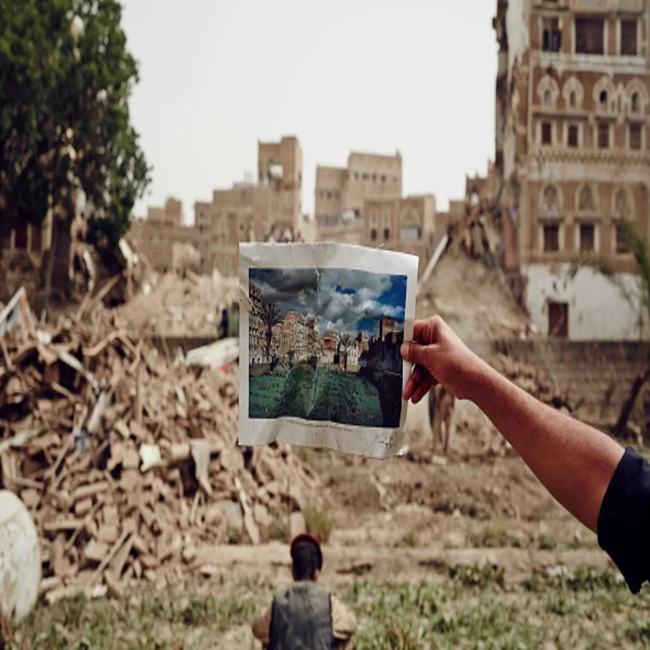
These questions have no simple answers. Writing and reflecting on this has been profoundly challenging for me as well because many of the tragedies unfolding in the world today directly affect thousands of children and families in the regions where they occur. Whether the crisis takes the form of conflict, displacement, or natural disaster, the human consequences are immediate and profound. For those raising or teaching children elsewhere in the world, the task becomes one of helping young minds understand suffering without allowing it to erode their sense of safety or hope. Psychology offers important insights that can help guide these conversations. One of the central principles emerging from developmental research is that children process difficult realities very differently from adults. When children ask questions about distressing events, they are often not seeking detailed explanations of geopolitical dynamics. More often, they are attempting to understand whether they themselves are safe.
A realistic recommendation from us to the adults would be that emotional reassurance must precede information. A calm response from an adult communicates safety and stability, which allows children to process new information without becoming overwhelmed. Simple statements that acknowledge the child’s concern while reassuring them of their own security can provide an essential emotional anchor. Another helpful approach is to follow the child’s lead. Adults sometimes feel compelled to provide detailed explanation but children often require only enough information to make sense of what they have heard. Asking gentle questions like what did you hear about this? or what made you think about that today? allows adults to gauge the child’s level of understanding and respond accordingly. This approach ensures that children receive information that is appropriate for their developmental stage rather than being exposed to complexities they are not yet ready to process.
Developmental differences play a significant role in shaping how such conversations unfold. Children in the primary years typically think in concrete terms and are still forming their basic sense of safety in the world. At this stage, explanations should remain simple, reassuring, and free from graphic detail. Emphasizing that many people around the world are working to help those affected by difficult situations allows children to understand that while challenges exist, compassion and care also exist alongside them.
As children enter the middle school years their capacity for abstract thinking and moral reasoning begins to expand. They may encounter discussions about global events through peers or social media, and their curiosity about these issues often increases. At this stage, conversations can gently encourage reflection and dialogue. Rather than offering definitive answers, adults can invite students to consider why conflicts occur, how communities support one another during crises, and what empathy might look like in such circumstances. These discussions begin to cultivate perspective-taking and social awareness.
Adolescents in the senior school years are often capable of engaging more deeply with the ethical, political, and psychological dimensions of global events. For them, conversations can expand to include themes such as media literacy, the psychology of group identity, and the ways in which narratives shape public understanding of conflict. Encouraging adolescents to critically evaluate information and reflect on their own values helps them develop into informed and thoughtful citizens.
Across all age groups, however, it remains important to cultivate empathy without fostering helplessness. Exposure to stories of suffering can sometimes leave children feeling powerless or distressed. Adults can support healthy emotional processing by also highlighting the ways in which individuals and communities respond to crises. Learning about humanitarian efforts, community solidarity, and acts of kindness reminds children that even in difficult circumstances, people continue to care for and support one another.Equally important is creating space for emotional expression. Children often process complex experiences through conversation, play, drawing, storytelling, and other forms of expression. When adults invite children to share how they feel about what they have heard, they help transform vague anxieties into emotions that can be understood and managed. Simply listening without dismissing or minimizing a child’s feelings can significantly reduce the uncertainty that often accompanies difficult topics.
At the same time, it is essential to protect children from information overload. Continuous exposure to distressing news can heighten anxiety even in adults, and children are particularly sensitive to such repeated stimuli. Maintaining routines, encouraging restorative activities such as sports and creative pursuits, and limiting repeated exposure to disturbing media coverage can help preserve a child’s emotional equilibrium. In the Indian context, these conversations carry additional layers of responsibility. Classrooms often bring together students from diverse cultural, religious, and socio-economic backgrounds, each shaped by their own family narratives and experiences. Educators therefore occupy a uniquely sensitive position. The language used in classrooms must be thoughtful, balanced, and inclusive. Rather than presenting complex global issues through rigid narratives, teachers can create spaces where students learn to ask questions, listen respectfully to multiple perspectives, and develop empathy for experiences different from their own.
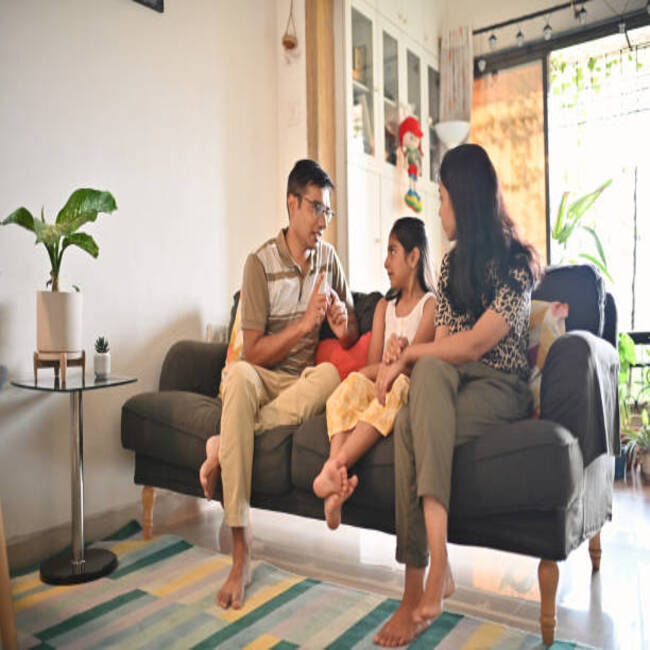
For parents the home remains a child’s first emotional anchor. Children frequently interpret the world through the emotional responses they observe in the adults around them. When parents engage with difficult news calmly and thoughtfully…. children internalize the idea that complex realities can be acknowledged without losing emotional stability. Open conversations, curiosity, and reassurance can help children approach the world with both awareness and resilience. The most important lesson we can offer children in uncertain times is that awareness and hope can coexist. The world has always contained moments of hardship and conflict but it has also been sustained by compassion, cooperation, and the human capacity to rebuild. Sometimes all we can do as a parent, teacher, counsellor or any adult in the life of child is to also gently hold onto this as well as the younger ones.
Ms Meghna Joshi
Psychodynamic Counsellor
The Indian School.
REFERENCES
Jean Piaget. (1952). The origins of intelligence in children. New York: International Universities Press.
Lev Vygotsky. (1978). Mind in society: The development of higher psychological processes. Cambridge, MA: Harvard University Press.
American Psychological Association. (2019). Talking to children about difficult events and news. Retrieved from https://www.apa.org
UNICEF. (2022). How to talk to your children about conflict and war. Retrieved from https://www.unicef.org
RESOURCE FOR PARENTS/EDUCATORS
Parents who wish to access practical guidance on discussing conflict and global crises with children may find useful resources through organizations such as UNICEF Parenting (@unicefparenting), War Child (@warchild), Save the Children (@savethechildren), and Voices of Children (@voices_of_children), which regularly share research-based insights on supporting children’s emotional well-being during times of global uncertainty.
Becky Kennedy - @drbeckyatgoodinside
A clinical psychologist who frequently discusses how parents can talk to children about difficult topics, including scary news and global events. Her content focuses on validating children’s feelings, providing emotional safety, and helping parents respond with calm, grounded language.
Lisa Damour - @lisae.damour
A psychologist known for her work on adolescents and emotional resilience. She often explains how teens process anxiety-provoking news and how parents can guide conversations about uncertainty and global crises in constructive ways.
Dan Siegel - @drdansiegel
A psychiatrist and expert in interpersonal neurobiology whose work focuses on emotional regulation, brain development, and helping children process overwhelming experiences through attuned parenting.
 In the Press
 Admissions