CBSE Teacher Workshop -"Understanding the Child Behind the Behaviour"
"Children must be taught how to think, not what to think." — Margaret Mead
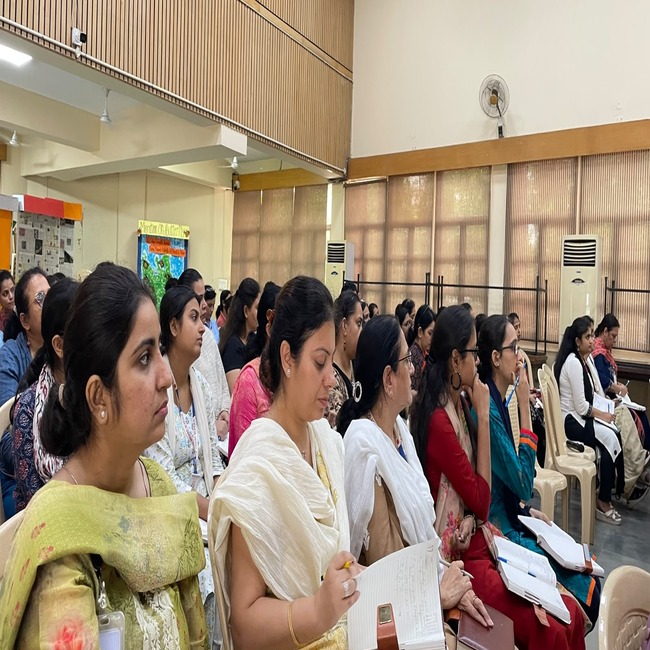
To strengthen teachers' understanding of student behaviour and promote positive classroom practices, The Indian School – Second Shift hosted a CBSE workshop for all teachers on 29 June 2026 on the theme, "Understanding the Child Behind the Behaviour." The session was conducted by Ms Meghna Joshi, who shared practical, research-based strategies to help educators understand the emotions and needs underlying children's behaviour.
The workshop began with a thought-provoking picture-based activity in which teachers interpreted the emotions of a child in an examination setting. This led to an insightful discussion on how behaviour is often the tip of the iceberg, reflecting hidden emotions such as confusion, anxiety, frustration, helplessness, or fear. Teachers were encouraged to shift their perspective from "How do I stop this behaviour?" to "What is the child trying to communicate?", recognising that every child seeks safety, belonging, fairness, respect, pride, and the assurance of being heard.
A key highlight of the session was understanding the significance of the first five minutes of responding to challenging behaviour. Teachers learnt how staying calm, responding with empathy, offering private corrections, and setting clear boundaries can effectively de-escalate situations while preserving the child's dignity.
The workshop also introduced the practical Three-Step Response—Acknowledge, Hold the Boundary, and Return—as an effective approach to managing behavioural challenges.
The session further emphasised the importance of building a reflective classroom culture, practising the principle of "Connect Before You Correct," maintaining anecdotal records, and incorporating micro-regulation strategies to create emotionally safe and supportive learning environments.
The workshop concluded with the powerful message that every behaviour tells a story. By choosing curiosity over judgement and connection over correction, teachers can build stronger relationships and foster classrooms where every child feels valued, understood, and empowered to learn. The enriching session equipped teachers with practical, classroom-ready strategies to respond confidently to challenging situations, strengthen teacher-student relationships, promote positive behaviour, and create a nurturing learning environment that supports every child's holistic development.
 In the Press
 Admissions